

1. Aeroelastic Modeling for Mars Aircraft and HAPS
We have entered the era of Mars exploration by aircraft. Flying in the thin air of Mars requires large wings, but the spacecraft transporting the aircraft from Earth to Mars lacks the storage space for such a device. This necessitates highly advanced technology: the ability to stow the wings in a folded state on the spacecraft and then deploy them mid-flight after arriving on Mars. Toward the realization of a Mars aircraft, our laboratory is developing wing deployment simulation technology (aeroelastic analysis technology) that couples structure and fluid. Furthermore, we have begun operating one of the world’s largest magnetic suspension and balance systems in a wind tunnel to replicate not only the interaction between structure and fluid, but also flight.
In recent years, we have been building on the results of this Mars aircraft research by attempting to realize a High Altitude Platform Station (HAPS), a base station in the sky that will fly continuously in the stratosphere 365 days a year.

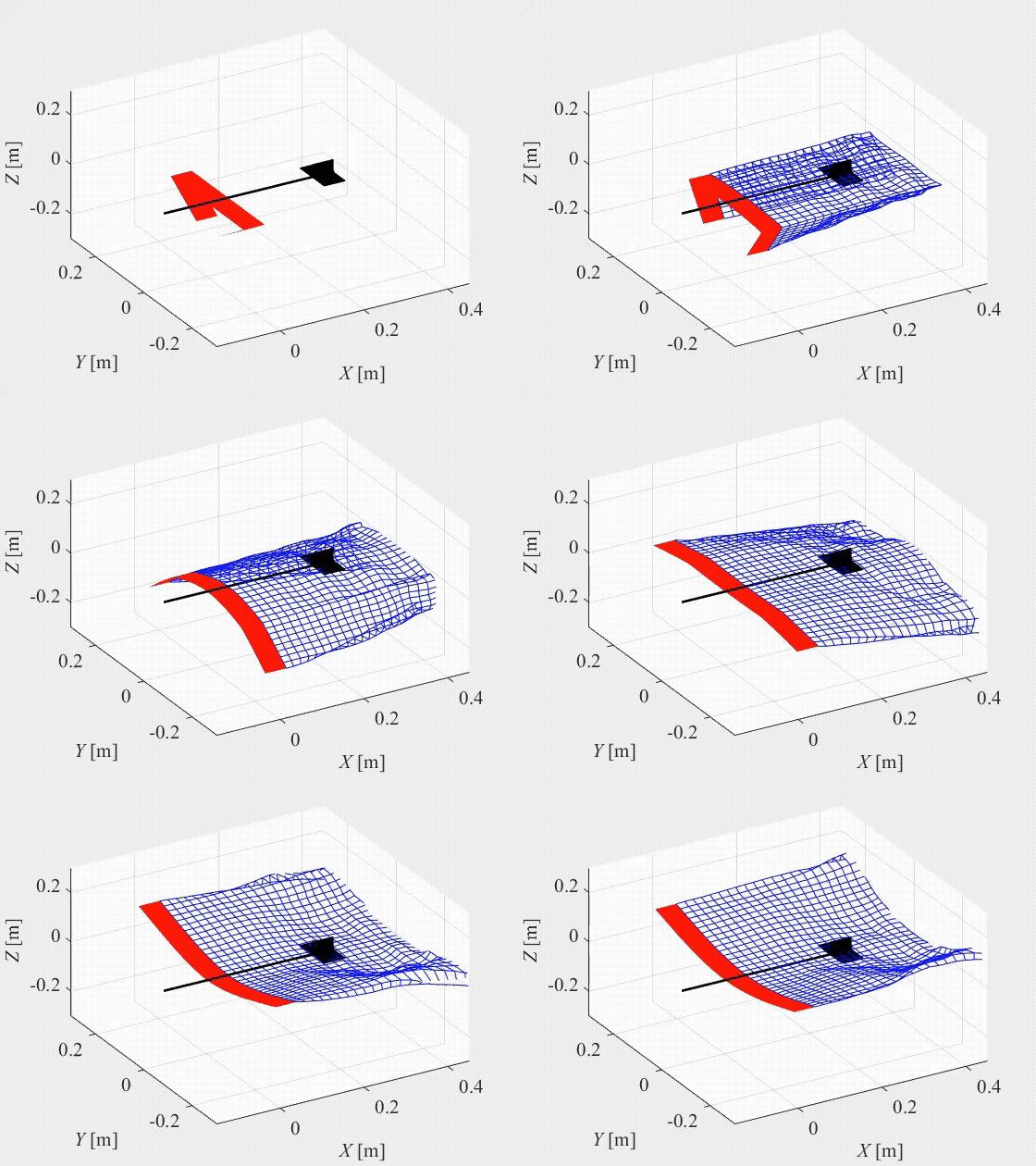
Wing deployment of mars aircraft

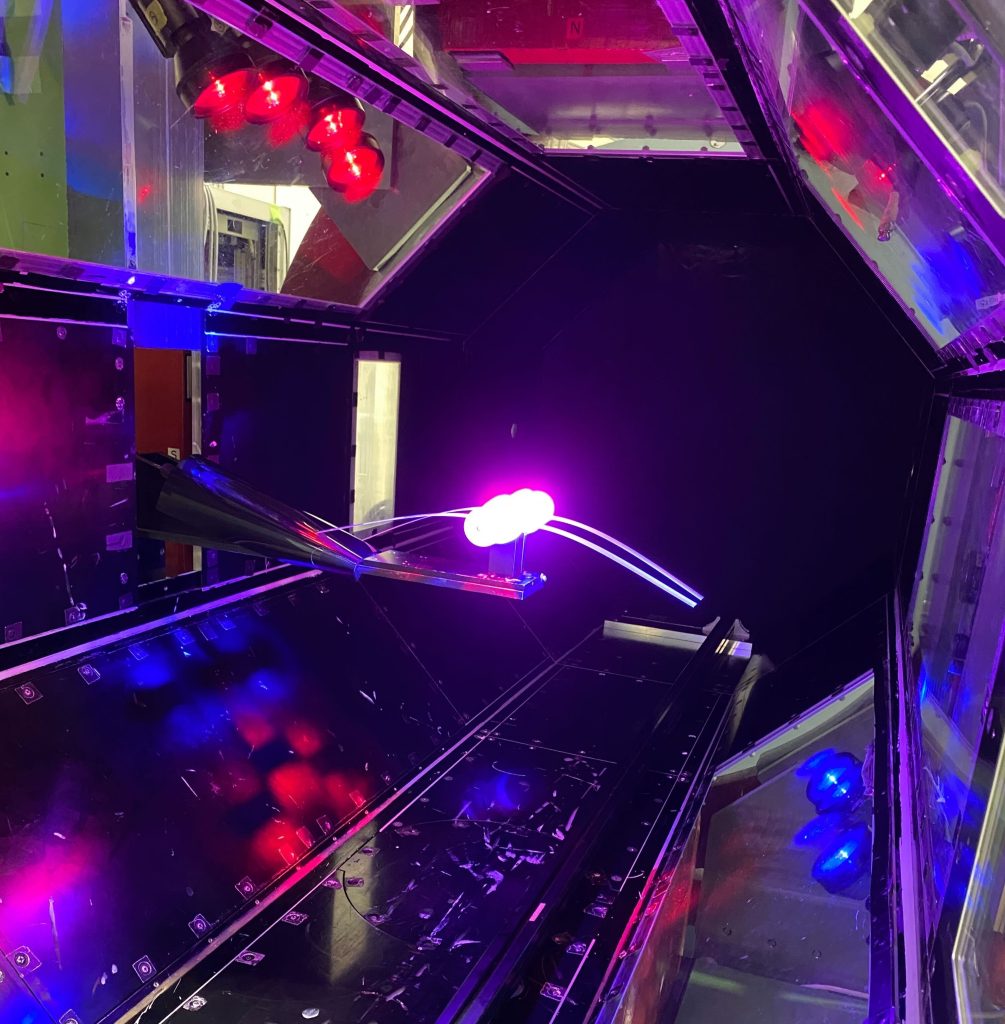
Wind tunnel with magnetic suspension and balancing system
References
[2025] Nonlinear Dynamic Analysis Framework for Slender Structures Using the Modal Rotation Method
Shizuno, Y., Dong, S., Kuzuno, R., Okada, T., Kawashima, S., Makihara, K., Otsuka, K.
ASME Journal of Computational and Nonlinear Dynamics, Vol. 20, No. 2, Article No. 021002 (Open Access)
[2025] Dynamic Modal Rotation Method with Inertial Nonlinearity for Large Deformation Analysis of Slender Structures
Shizuno, Y., Kuzuno, R., Nagai, N., Kawai, M., Kawashima, S., Kodama, Y., Makihara, K., Otsuka, K.
Journal of Sound and Vibration, Vol. 619, Article No. 118427 (Open Access)
[2022] Joint Parameters for Strain-Based Geometrically Nonlinear Beam Formulation: Multibody Analysis and Experiment
Otsuka, K., Dong, S., Fujita, K., Nagai, H., Makihara, K.
Journal of Sound and Vibration, Vol. 538, Article No. 117241 (Open Access)
[2022] Consistent Strain-Based Multifidelity Modeling for Geometrically Nonlinear Beam Structures
Otsuka, K., Wang, Y., Fujita, K., Nagai, H., Makihara, K.
ASME Journal of Computational and Nonlinear Dynamics, Vol. 17, No. 11, Article No. 111003 (Open Access)
[2022] Nonlinear Aeroelastic Analysis of High-Aspect-Ratio Wings with a Low-Order Propeller Model
Otsuka, K., Del Carre, A., Palacios, R.
AIAA Journal of Aircraft, Vol. 59, No. 2, pp. 293-306 (Open Access)
2. Flexible Multibody Dynamics for Aerospace Structures
Constructing large structures in space, such as solar power stations and habitats, requires innovative structural analysis techniques that go beyond existing frameworks. Our laboratory is creating and experimentally demonstrating methods for analyzing the behavior of “multibody systems,” structures with joints, such as satellites. The multibody dynamics analysis techniques developed by our laboratory are not limited to space structures; they are also useful for aircraft, robots, automobiles, trains, elevators, wind turbines, and even the human body.
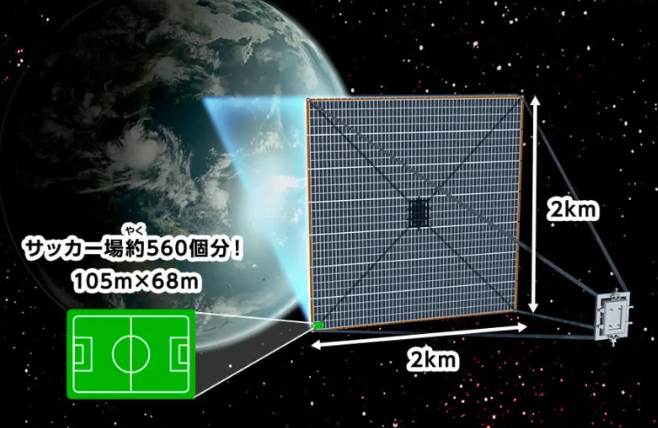
SSPS ©JAXA
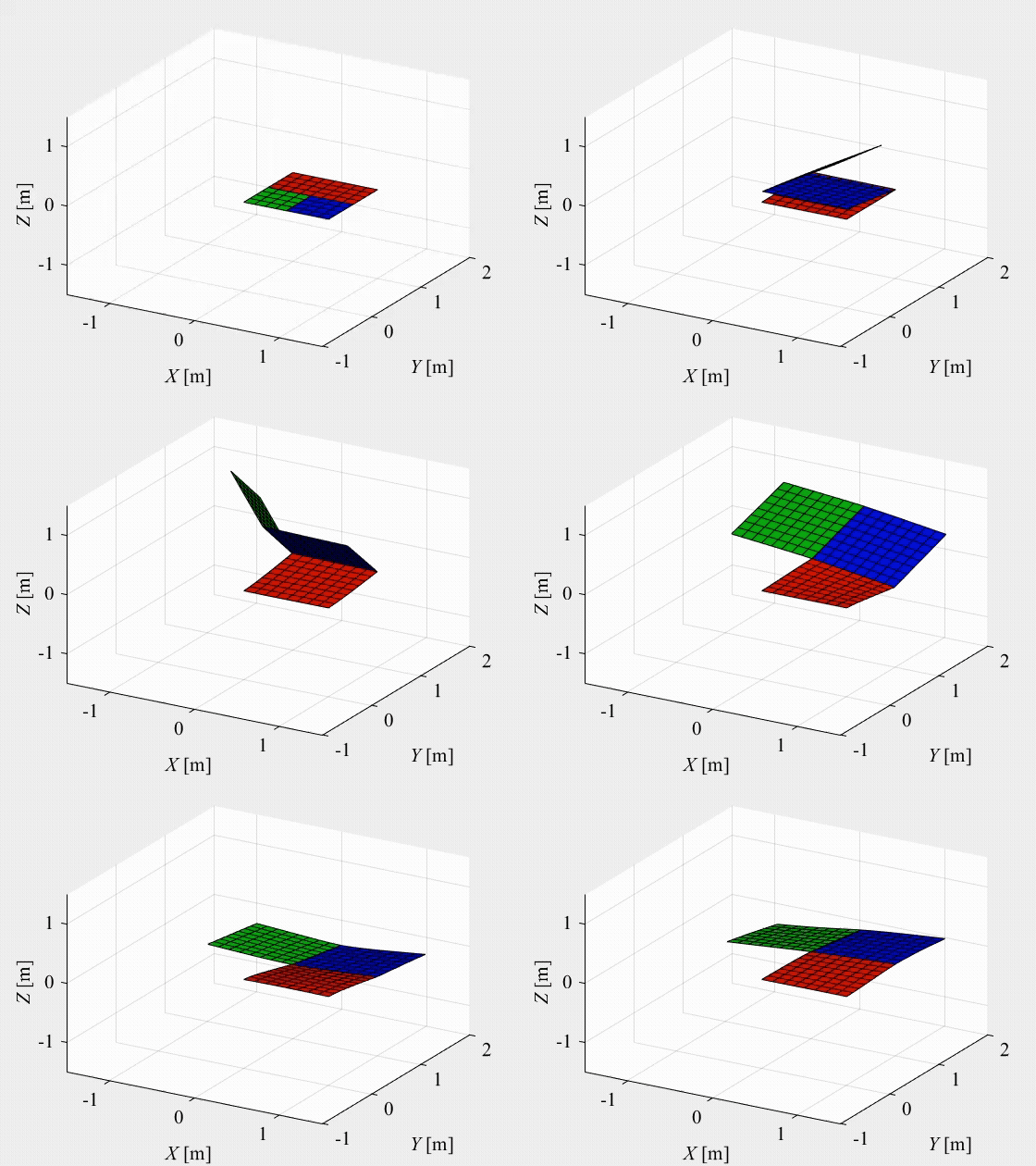
Deployment simulation of flexible solar panels
References
[2025] Deep Learning for Constructing Ordinary Differential Equations in Hamiltonian Formulation of Multibody Systems
Dong, S., Kuzuno, R., Makihara, K., Otsuka, K.
Mechanics Research Communications, Vol. 148, Article No. 104485 (Open Access)
[2024] High-Fidelity Flexible Multibody Model Considering Torsional Deformation for Nonequatorial Space Elevator
Kuzuno, R., Dong, S., Takahashi, Y., Okada, T., Xue, C., Otsuka, K., Makihara, K.
Acta Astronautica, Vol. 220, pp. 504-515 (Open Access)
[2022] Strain-Based Geometrically Nonlinear Beam Formulation for Rigid-Flexible Multibody Dynamic Analysis
Otsuka, K., Wang, Y., Palacios, R., Makihara, K.
AIAA Journal Vol. 60, No. 8, pp. 4954 – 4968 (Open Access)
[2022] Recent Advances in the Absolute Nodal Coordinate Formulation: Literature Review from 2012 to 2020
Otsuka, K., Makihara, K., Sugiyama, H.
ASME Journal of Computational and Nonlinear Dynamics, Vol. 17, No. 8, Article No. 080803 (Open Access)
3. Topology Optimization for Aerospace Structures
We are creating topology structural optimization technology to automatically calculate aerospace structures that are both strong and lightweight. Advances in 3D printers have made it possible to manufacture complex topology structures at the component level. However, for aerospace structures consisting of a huge number of components, problems arise in which the components automatically calculated using optimization technology cannot be “assembled.” Furthermore, even with a 3D printer, there are cases where the automatically calculated structure cannot be “manufactured.” Our laboratory proposes a new method that incorporates the designer’s intentions into the automatic structural calculation process to enable “assembly” and “manufacturing,” and is attempting to fully automate the calculation of large aerospace structures that can actually be constructed.
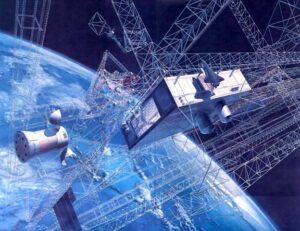
Next-generation space station
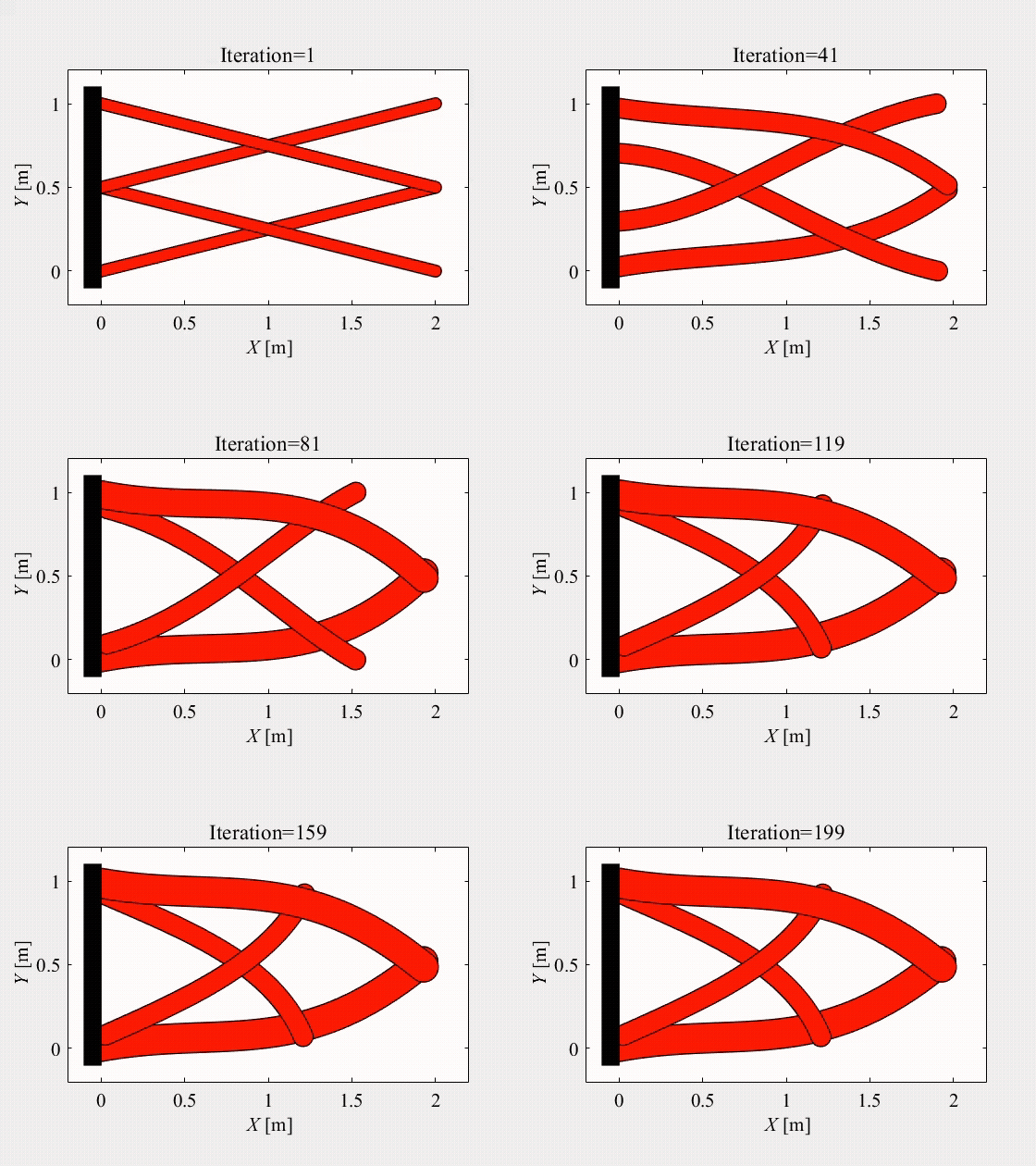
Topology optimization
References
[2025] Data-Driven Real-Time Topology Optimization Using Consistent Rotation-Based Moving Morphable Components
Hirotani, S., Yaji, K., Makihara, K., Otsuka, K.
AIAA Journal, Vol. 63, No. 10, pp. 4491-4497 (Open Access)
[2024] Moving Morphable Components Using Strain-Based Beam Geometry Description for Topology Optimization
Otsuka, K., Yamashita, H., Sugiyama, H., Dong, S., Kuzuno, R., Makihara, K.
AIAA Journal, Vol. 62, No. 12, pp. 4846-4854 (Open Access)
[2023] Moving Morphable Multi Components Introducing Intent of Designer in Topology Optimization
Otsuka, K., Dong, S., Kuzuno, R., Sugiyama, H., Makihara, K.
AIAA Journal, Vol. 61, No. 4, pp. 1720-1734 (Open Access)