
2026年4月16日、簡(メイ)研究室主催による第151回 環境コロキウムが、環境科学研究科エコラボ第4講義室にて開催されました。本講演では、台湾・国立中正大学 地球環境科学科のChien-Yen Chen教授をお迎えし、環境地球化学およびヒ素研究の第一人者としてご講演いただきました。
本コロキウムには、簡 研究室のメンバーに加え、淳研究室、さらに環境科学研究科(GSES)に所属する多くの研究者および学生が参加し、分野横断的な活発な交流が行われました。
講演タイトルは、「From Arsenic Cycling to Sustainable Remediation: Integrating Microbial Processes, Geochemistry, and Green Materials」, であり、世界的に深刻な環境問題である地下水中のヒ素汚染について、包括的かつ実践的な視点から講演が行われました。
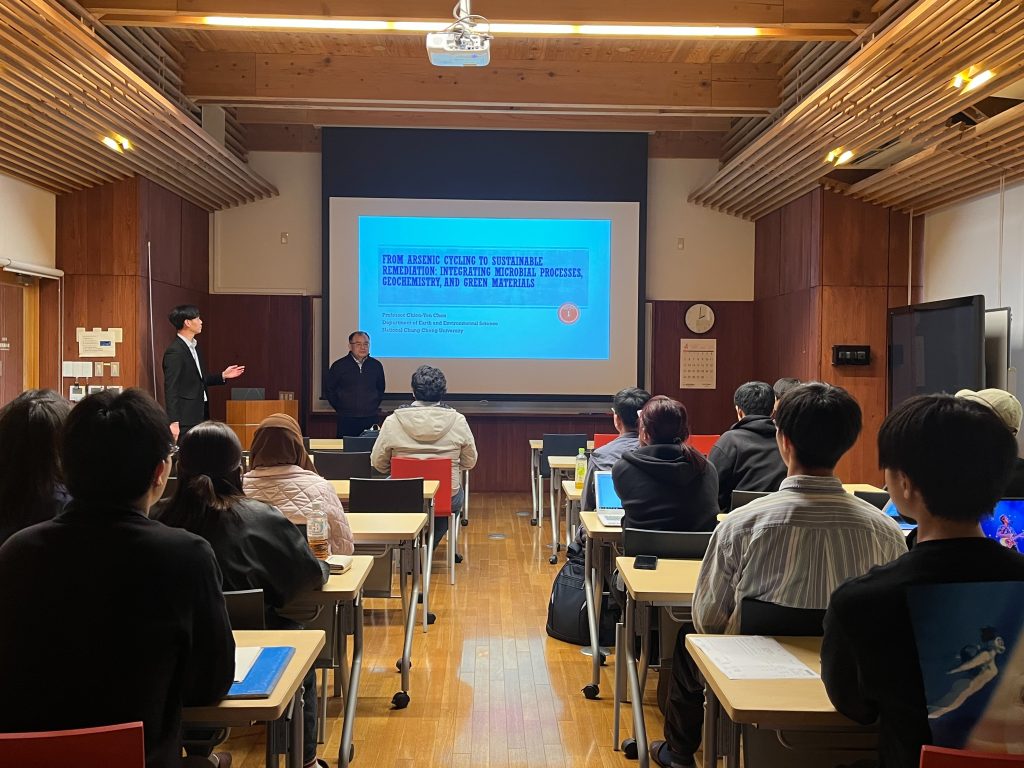
Prof. Chien-Yen Chen presenting his research on arsenic contamination and remediation.
Chien-Yen Chen教授は、台湾でのフィールド調査および国際共同研究の成果をもとに、ヒ素の移動性や毒性が酸化還元条件(Eh)、地質環境、微生物活動の相互作用によって決定されることを示しました。また、汚染された飲料水の長期摂取による慢性的な健康被害など、環境プロセスと人間の健康影響との密接な関係についても説明されました。
さらに本講演では、環境モニタリングとバイオモニタリングの統合が重要な要素として紹介されました。台湾の地下水および地熱系の事例に加え、インドにおける毛髪・爪・尿サンプルを用いた研究から、環境中のヒ素濃度と人体への曝露との直接的な関連性が示されました。
また、将来に向けた解決策として、以下のような持続可能な修復技術が強調されました:(1)微生物による鉱物化プロセス, (2)鉄系ナノ材料を用いたヒ素除去 。 これらは、統合的かつスケーラブルで、環境に配慮した技術への転換を示すものです。
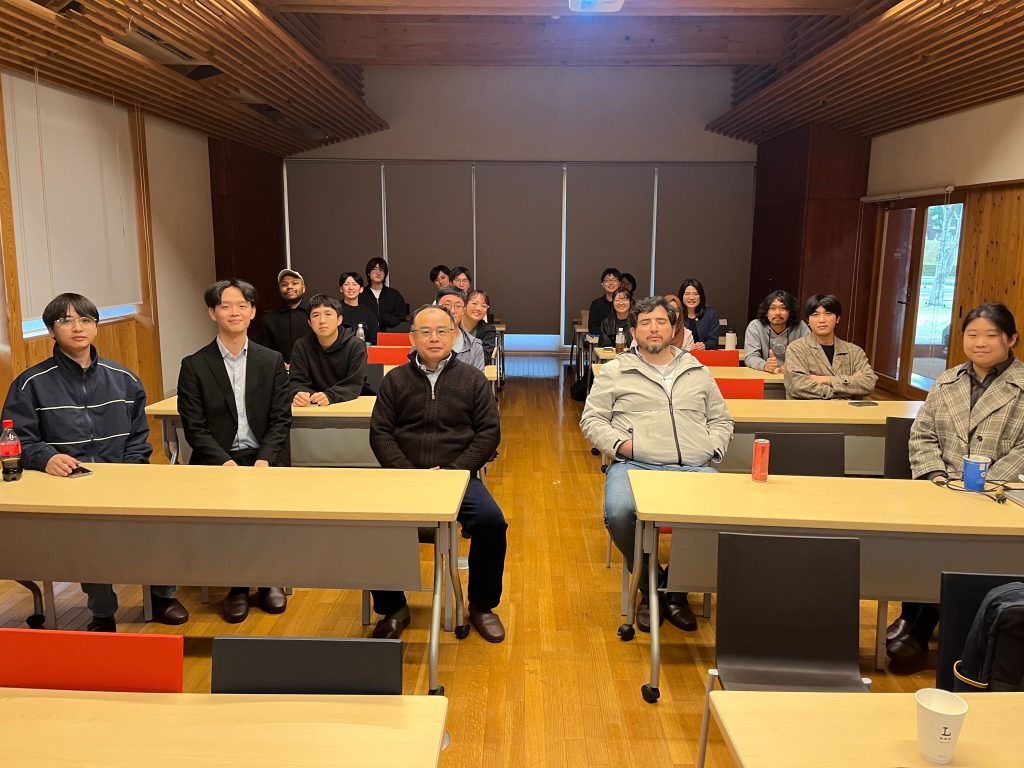
Prof. Chien-Yen Chen with members of the Mei Laboratory, Iizuka Laboratory, and other participants at Tohoku University.
学生の声(簡(メイ)研究室)
Q:本講演で最も興味深い、または印象に残った内容は何ですか?その理由も教えてください。
Liuさん(D2・中国)
「Chien-Yen Chen教授のバイオモニタリング研究が特に印象的でした。ヒ素濃度が20〜60歳の年齢層で最も高くなるという結果は非常に興味深いです。この傾向が基礎代謝の高さや水分摂取量の増加といった生理的要因に関連しているのかに関心があります。」
Q:本講演はあなたの研究分野や関心とどのように関連していますか?
Alamさん(M2・インドネシア)
「本講演は、現在取り組んでいるシダ植物(Pteris vittata)を用いたヒ素のファイトレメディエーション研究と非常に関連しています。ヒ素の環境中での挙動や人体への影響、さらにEhやpHといった地球化学条件に基づく動態について理解を深めることができました。また、最新の修復技術についても有益な知見を得ることができました。」
Q:本講演から得た重要な学びと、それが今後の研究や学修にどのように役立つと考えますか?
Choityさん(M1・バングラデシュ)
「本講演では、ヒ素循環における酸化還元条件、微生物活動、地球化学的要因の重要性が強調されました。特に、微生物が金属の変換を担い、持続可能な修復に寄与する点が印象的でした。これらの知見は、自身の研究において金属の移動性や土壌中での微生物の役割を理解する上で非常に有用だと考えています。」
本コロキウムは、環境地球化学・微生物学・材料科学を結びつける学際的アプローチの重要性を示すとともに、実社会の環境問題解決に向けた幅広い視点を提供する貴重な機会となりました。
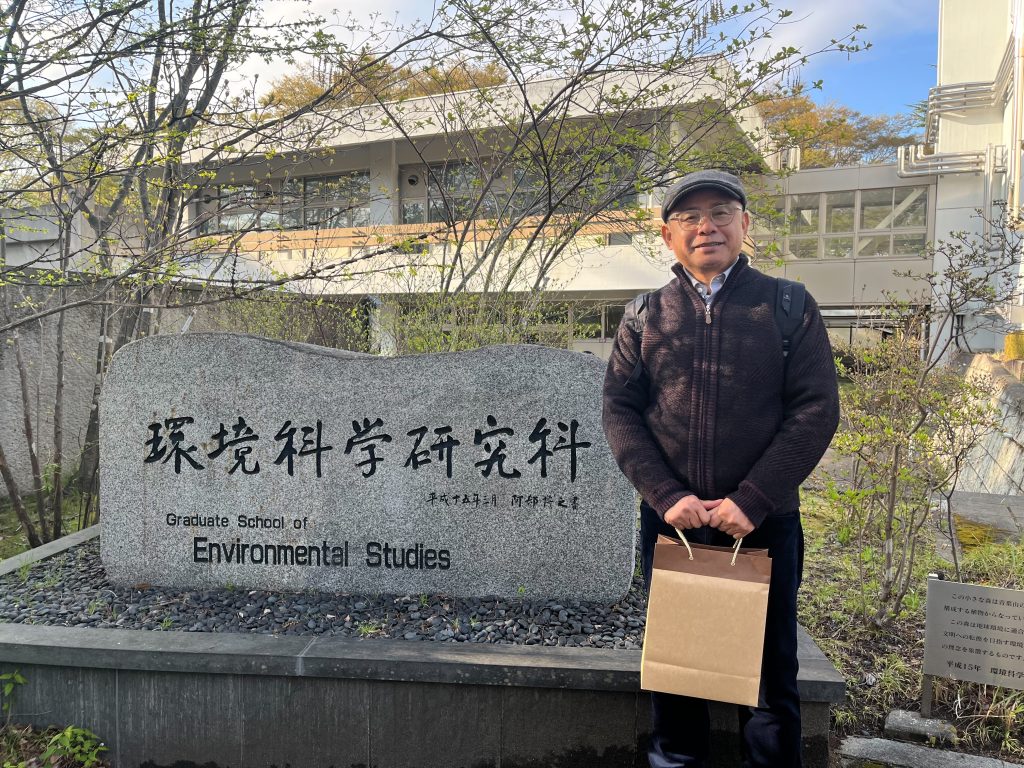
Prof. Chien-Yen Chen, Ph.D.
関連情報:
本イベントの詳細については、以下をご参照ください:
https://www.kankyo.tohoku.ac.jp/event/e20260416.html
Chien-Yen Chen教授についての詳細は、以下をご参照ください:
https://www.scopus.com/authid/detail.uri?authorId=8713814500 または https://eqlab.ccu.edu.tw/p/412-1074-1008.php?Lang=zh-tw
English:
The 151st colloquium on environment held: advancing solutions to arsenic contamination
The 151st Colloquium on Environment, hosted by the Mei Laboratory, was held on April 16, 2026, at the GSES Ecolab 4th Lecture Room. The event featured Prof. Chien-Yen Chen (PhD) of National Chung Cheng University, Taiwan, a leading expert in environmental geochemistry and arsenic research.
The colloquium was attended not only by members of the Mei Laboratory, but also by participants from Iizuka Laboratory, along with other interested researchers and students across the Graduate School of Environmental Studies (GSES), reflecting strong interdisciplinary engagement.
In his lecture, “From Arsenic Cycling to Sustainable Remediation: Integrating Microbial Processes, Geochemistry, and Green Materials,” Prof. Chen presented a comprehensive yet grounded perspective on one of the most persistent global environmental challenges—arsenic contamination in groundwater.
Drawing from extensive fieldwork in Taiwan and international collaborations, Prof. Chen illustrated how arsenic mobility and toxicity are shaped by the interplay of redox conditions, geological settings, and microbial activity. His discussion moved beyond theory, connecting environmental processes to real human health impacts, including chronic exposure risks linked to contaminated drinking water.
A notable aspect of the lecture was its integration of environmental monitoring and human biomonitoring. Case studies from Taiwan’s groundwater and geothermal systems, alongside research in India using hair, nail, and urine samples, shows the direct relationship between environmental arsenic levels and human exposure.
Prof. Chen also emphasized forward-looking solutions, highlighting sustainable remediation strategies such as; (1) Microbially driven mineralization processes and (2) Iron-based nanomaterials for arsenic removal. These approaches reflect a shift toward integrated, scalable, and environmentally conscious technologies.
Student reflections (Mei-Laboratory)
Q: What concept or idea from the lecture did you find most interesting or impactful, and why?
Liu-san (D2, China)
“Prof. Chen’s biomonitoring research was particularly compelling. The study showed that arsenic concentrations peak in the 20–60 age group, significantly higher than other cohorts. I am interested in whether this trend is related to metabolic activity—such as higher basal metabolism or greater water intake—leading to increased internal exposure and incorporation into keratinized tissues.”
Q: How does the lecture relate to your current field of study or research interests?
Alam-san (M2, Indonesia)
“This lecture is highly relevant to my research on arsenic phytoremediation using Pteris vittata. Prof. Chen clearly explained arsenic contamination pathways and its impact on human health, as well as strategies to address it. I gained valuable insights into arsenic dynamics under different geochemical conditions, such as Eh and pH, and current remediation technologies.”
Q: Given Prof. Chen’s lecture, what key points did you learn, and how can these help your studies or academic development?
Choity-san (M1, Bangladesh)
“The seminar emphasized arsenic cycling and the role of redox conditions, microbial activity, and geochemical factors in controlling its mobility and toxicity. I learned how microorganisms drive metal transformations and contribute to sustainable remediation. These concepts are highly relevant to my studies and will help me better understand metal mobility and microbial influences in soil systems.”
The colloquium provided not only scientific insights but also a broader perspective on how interdisciplinary approaches—linking geochemistry, microbiology, and material science—can contribute to solving real-world environmental problems.
For more information about the event, please visit:
https://www.kankyo.tohoku.ac.jp/event/e20260416.html
To learn more about Prof. Chien-Yen Chen, PhD, please see:
https://www.scopus.com/authid/detail.uri?authorId=8713814500 or https://eqlab.ccu.edu.tw/p/412-1074-1008.php?Lang=zh-tw